Friday, February 1, 2013

32 Starling
  • A group of Starlings is called a: Murmuration.
  • An interesting thing about starlings is their beaks turn black in the winter.  I am so used to seeing them with yellow beaks that I didn't know what they until I read up on them.  
  • These birds re very prolific and are not thought of well because the damage they can do to crops and fruit. 
  • They are a very beautiful bird and ate seeds and tallow feeders.  They puff themselves up when the wind blows and it is cold.
  • This Murmuration was feeding under the feeder at Melanie's house.  You can see one of the starlings beaks wasn't fully black.

Thursday, January 31, 2013

31 American Goldfinch
  • A group of goldfinches has many collective nouns, including a " 007", "charm", "rush", "treasury", and "vein" of goldfinches.
  • These charming birds were everywhere.  Originally we thought they were Yellow Bellied Fly Catchers but thanks to a birdwatcher in Nova Scotia we learned they were American goldfinches in their winter plumage.  The American goldfinch changes to its breeding plumage by a full moult of its feathers.  This bird molts twice a year, instead of once like the rest of the goldfinch species.
  • It was odd but we didn't see a sparrow the whole time we were in Nova Scotia but we saw this little fellow repeatedly and in numbers.
  • there were the odd Red Poll with them and they were about the same size.
  • Depending on the light you could see yellow, lime green, rich brown and the contrasting black and white wings.
30 Great Black Backed Gull
  • A group of Great Black Backed Gulls is called a: Gullery / Screech / Squabble
  • This is a real beautiful gull, the contrast from black back to the white head is very striking. 
  • This is one of the largest gulls, it will eat puffins and small ducks in a single gulp. yikes.
  • They travel with Herring Gulls.
  • They will fallow humpback whales and catch the fish coming to the surface to avoid the whale. How cool is that?
  • I love watching them bob up and down on the waves.  This large male was grooming himself. as if the water wasn't there.
  • The tide at Digby is 27 feet.  When it was out so were the birds.


Lily Lauren

Lily Lauren has been added to our Big Year hunters.
Although she is a bit small to get round she is still part of the team.  Number 11 of our grand-kids and is she ever looking around.  Her sister Willow and I have been going out on walks in the morning and have seen some interesting birds.  The weather up until we showed up has been unusually warm.  Lots of birds that should have migrated somewhere warm are here. It has been cold for a week now and I bet they wish they were gone.

Wednesday, January 30, 2013

29 Herring Gull

  • A group of Herring Gulls is called a Gullery / Squabble.
  • This is one of the most numerous birds out here in Nova Scotia. We see a Gullery every-time we see a Gull and yes they seem to be Squabbling.
  • The Herring Gull is a very intelligent bird it has a very adapted vocalization and body language. It can communicate with just the tip of its head or the body movement and a sound it makes. The mature Herring Gull has a very distinct coloring but the trouble is the immature gull has a very large range of coloration making spotting other breeds of gulls very difficult.
  • I was very surprised at what good swimmers and divers they were.
  • We took the pictures of the Squabble at Digby. The lone gull was on a roof in Berwick the apple capital of Nova Scotia, also where Sean, Mel, Willow and now Lily live.
  • Gulls eat everything.  They are kind of like a Raven on the prairie.
  • I love to watch them soar, catching thermals and rising up into the air.

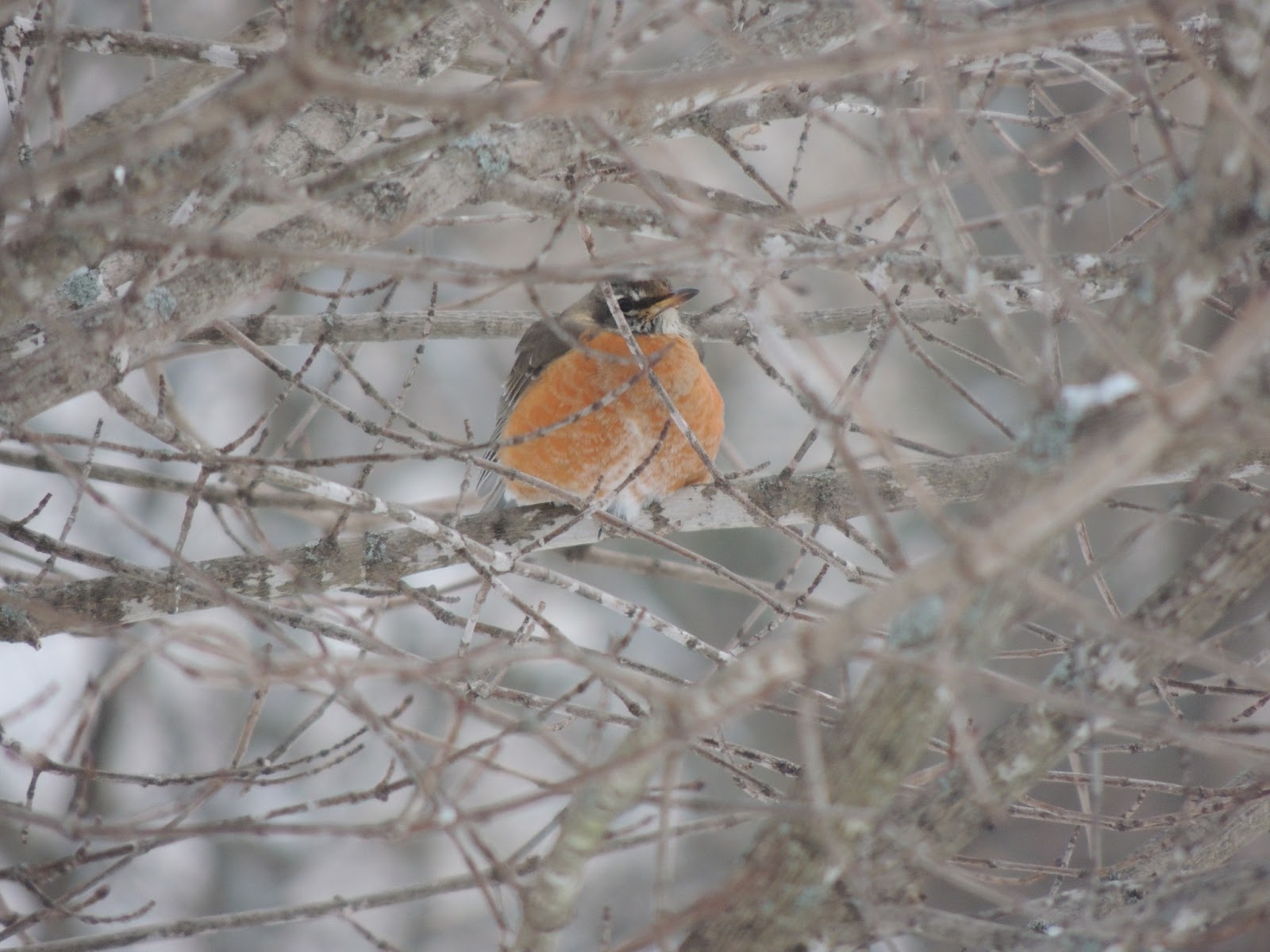
28 American Robin
  • A group of Robins is called a; Worm.
  • We saw up to 40 Robins, a very large Worm in deed in Nova Scotia. It was -18 C here and they were really puffing themselves up.
  • The robins usually eat insects and worms but will eat fruit and seeds when winter hits.
  • They have a very distinct song.  "When the red red robin goes bob bob bob-en along" as they say.
  • In many places on the prairie the return of the Robin is the first sign of spring.  I kind of like a place where they never leave.

Wednesday, January 16, 2013

27 Hungarian or Grey Partridge
  • A group of Grey Partridge is a; Bevy / Brace / Covey.
  • Grey or Hungarian Partridge are also called a Hun or Huns.
  • A Hun is one of the best upland game birds to hunt.  They are fast runners, quick take off, fast flyers, acrobatic and small, very difficult to shoot.  They are very tasty, I remember as a teenager my brother and I would bag enough for our family of 8. 
  • There numbers over the years have been greatly reduced by the increase of predators,  birds and fox.  
  • You still see them on grain fields a Bevy of 6 to 12.  They like winter wheat fields.  I love unmistakeable grey coloration.